Portfolio
A closer look at the programs I've led and helped build: STREAM, Eco-Schools & Green Academy leadership, SDG education, the Garden Project, and community and global partnerships like Roots & Shoots.
Over the past 3 years, I have helped lead the development of our flagship STREAM program at my American international school in Chiang Mai, which integrates STEM and project-based education, outdoor and community-based learning, and SDG integration and global citizenship into the curriculum through weekly STREAM elective classes for all K–12 students, integration into existing core curriculum, and extracurricular student leadership and committees.
I created the curriculum for our STREAM classes in grades 3–5, teach the weekly STREAM class for upper elementary grades, work with homeroom teachers in our building to integrate STREAM into core curriculum, and work on a team for vertical alignment and KPI goals of the program as a whole.
Some accomplishments include a garden-based, schoolwide sustainability challenge system with different projects for each grade level, field trip experiences aligned with STREAM topics and goals, community partnerships, annual events for showcasing our goals and accomplishments, and marketing strategy and future planning.
See curriculum work →Water quality testing, STREAM science unit
Prototyping in Tinkercad & Scratch
Garden-based sustainability challenge, STREAM
Compost engineering challenge, STREAM
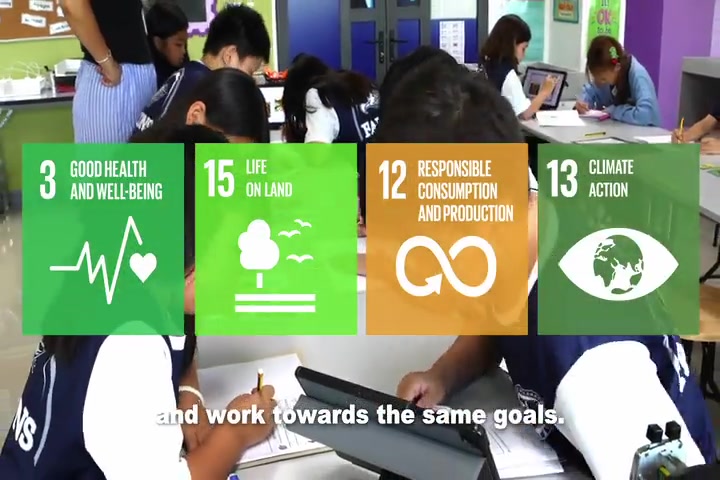
The UN Sustainable Development Goals are woven into everything we do. Every STREAM project is anchored to at least one SDG, giving students a real-world lens for their work. In 2024, I attended the Inspire Citizens Summit to deepen my own practice in the service learning framework, learning how to move students from awareness to genuine, sustained action. Our school is also part of the Global Schools Network, connecting us with educators worldwide who are teaching toward the same goals.
Introducing the Sustainable Development Goals
Student reflections on the Global Goals
Using Earth Cubs cards to read and categorize the SDGs
Class portfolio websites, where students reflect on how each unit ties into the SDGs
It was incredible to be part of our Eco Committee leadership team, facilitating the 2025–2026 year-long Green Academy accreditation process through WWF Thailand and Chulalongkorn University. This is a brand-new accreditation, created by WWF Thailand and Chulalongkorn University to replace the former Eco-Schools accreditation. The process was a full cycle: building an integrated committee of students, teachers, parents, and community partners; leading students through a school-wide environmental review and audit; creating real action plans; measuring impact; and documenting results, before finally guiding students in presenting those results to WWF at the end of the year. It resulted in the Green Champion Award, the highest accreditation possible.
Green Champion Award, 96/100
Painting our Eco-Schools banner
Presenting our results to WWF
Sharing our Eco-Schools impact data
One of our biggest projects within STREAM is our school-wide garden, which doubles as a learning space and a real-life sustainability challenge system for teaching systems thinking: how the many pieces of sustainable agriculture work together. Within it sit a Grade 5 compost system built from food waste, biochar water filtration using biochar from our own kiln burns, a butterfly sanctuary, a hydroponics system, 40 stingless beehives from our partners at 99 Hives, and multiple growing beds we plant throughout the year. Each year, our team sets goals for expanding the garden space, decides which projects get integrated into which grade levels based directly on NGSS standards, and facilitates student-led maintenance and monitoring so the garden keeps growing and improving.
Planting our tire-planter garden beds
Weighing our Grade 5 compost system
Monitoring our stingless beehives
Harvesting from our hydroponics system
Roots & Shoots is Jane Goodall's global service learning program, built around a four-step model that moves students from noticing a problem to taking real action on it. Not every sustainability project we run follows this model exactly, but the ones that do, like our compost project, take students through the full cycle: identifying a real issue, researching it, planning a response, and carrying it out. Our composting project was recently featured on Roots & Shoots Global.
For the past four years, I've co-led our Grade 6 upper elementary Student Council. Students facilitate events like Sustainability Week, identify building improvement initiatives, and carry out action plans that serve grades 3 through 6. This year, our STUCO team also took on the role of Eco Committee, leading the school through the Green Academy accreditation process. STUCO culminates each year in an overnight camping trip to Chiang Dao, at the farm of our community partner, Lila Farms, where students take part in real outdoor learning workshops, set up their own tents, and cook meals together.
Presenting our healthy eating initiative to WWF
Annual overnight field trip to Lila Farm
Interviewing our cafeteria lead on health initiatives
STUCO leadership speeches
In addition to our annual STUCO overnight camping trip, part of my job is organizing field trips for Grades 4 and 5 that are topically aligned with the standards we teach, giving students hands-on experiences within our community and adding real context to what they're learning. Each grade takes two STREAM field trips a year. Some of our yearly community-based field trips include agriculture workshops at Mae Tha Farm, a composting trip to Boonthavorn Park to study and collect brown matter, chocolate-making at Skugga Farm tied to our Grade 5 matter and cooking unit, and STEM workshops at NSM Science Square.
Collecting brown matter at Boonthavorn Center
Chocolate making at Skugga Farm
STUCO leaders at Daughters Rising, learning about the protection and empowerment of Burmese women and girls in Thailand
Teaching students to set up tents at annual Lila Farm camping trip
I co-lead our school's yearly Sustainability Week, four days of events and themes centered around Earth Day. The topics differ each year. Our student team decides which issues or SDGs they feel most passionate about, then plans charity sales, daily community speakers and partnerships, and educational initiatives built around those themes. Some of this year's big topics included becoming a healthier school through farm-to-table and sugar-reduction initiatives, introducing our new beehives with a honey tasting in partnership with 99 Hives, and emphasizing the importance of reducing waste.
Sustainability Week schedule, Earth Day 2026
Hydroponics harvesting to package and give away to students
Introducing daily community speakers
99 Hives honey tasting & bake sale
Every year, our STREAM team partners with the art department on Art for Impact, a school-wide auction of student sustainability art that raises money for an SDG-aligned charity. The student body votes on which Sustainable Development Goal to support, and from there we choose a local Thai organization whose work best fits that goal. Together with the art department, we facilitate grade-wide art projects throughout the year, then bring it all together into one event: student performances, sustainable screen printing, workshops, booths from our community partners, STREAM project showcases, and of course the art itself, up for auction. In our first year, students voted for Gender Equality as the SDG of the year, and the auction raised over 50,000 baht for the Pratthanadee Foundation.
The auction wall, ready for bidding
Mixed-media piece made from recycled materials
This year's Art for Impact flyer
Sustainable screen printing at the event